AI NPC Behavior System
Engineering Case Study
A WebGL-ready Unity AI gameplay prototype showcasing adaptive NPC behavior using finite state machines, NavMesh pathfinding, line-of-sight detection, hearing systems, and aggression-based decision making.
Load Interactive Demo
Click to initialize the WebGL engine (~15MB). Best experienced on desktop.
Live WebGL Instance Running
Click inside to lock mouse • Esc to unlock
System Overview
This architecture defines a lightweight, highly decoupled AI system designed to operate efficiently within WebGL constraints while providing emergent, responsive behavior. The environment consists of a single player and a dynamic NPC agent.
The core logic loop monitors a hearing radius, vision cone, and environmental line-of-sight checks. Depending on the player's aggression (calculated via DPS) and the NPC's remaining health, the system transitions between sweeping search behaviors, aggressive combat pursuit, and tactical retreats.
Core Constraints
AI Decision Flow
Input
Player Tracker
Sensor
Perception System
Brain
NPC FSM Core
Motor
NavMesh / Combat
Finite State Machine (FSM)
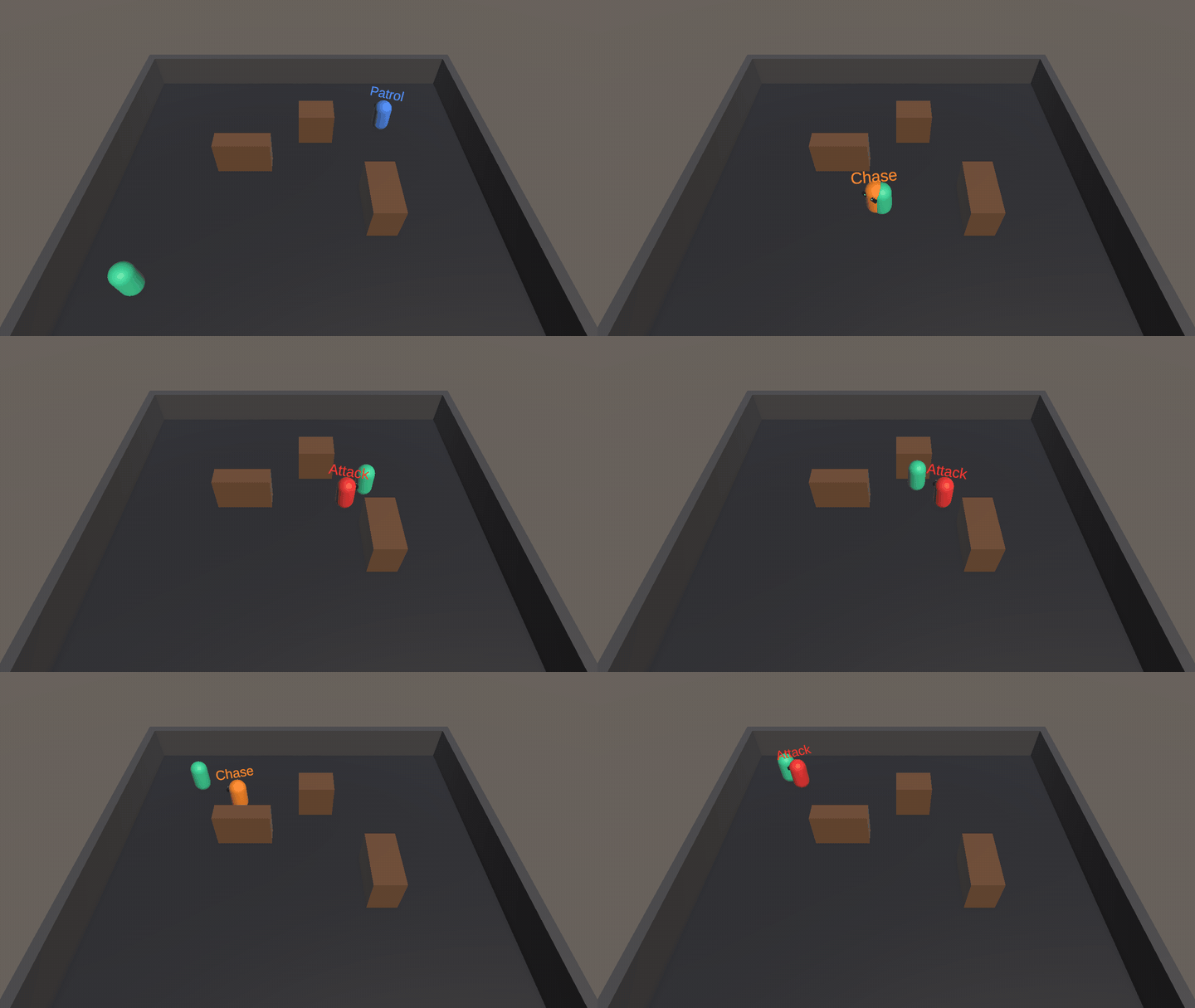
The NPC's logic is governed by a strict hierarchical state machine. This prevents conflicting behaviors (e.g., trying to shoot while retreating) and makes debugging highly deterministic.
Patrol_State
Generates random waypoints on the NavMesh. Moves at walking speed. Transitions to Chase upon visual/audio detection.
Chase_State
Increases speed to running. Continually updates destination to Player position. Transitions to Attack when within range.
Attack_State
Halts movement. Engages combat systems. Checks Line of Sight before firing. Transitions back to Chase if player breaks LOS.
Retreat_State
Triggered by low health or high player aggression. Calculates escape vectors away from player position.
Search_State
Triggered when losing the player. Moves to last known location and rotates to scan area before returning to Patrol.
Perception System
Environmental awareness is decoupled from the Brain. The Sensor module runs staggered spatial queries to prevent Physics frame-drops.
- 1
Hearing Sphere (Radius: 2m)
OverlapSphere detects player movement regardless of obstacles if they are sprinting too close.
- 2
Vision Cone (Angle: 110°, Range: 8m)
Dot product calculation verifies if the player is within the forward frustum of the NPC.
- 3
Line of Sight (Physics.Linecast)
A final raycast ensures walls/obstacles block vision before triggering a confirmed detection.
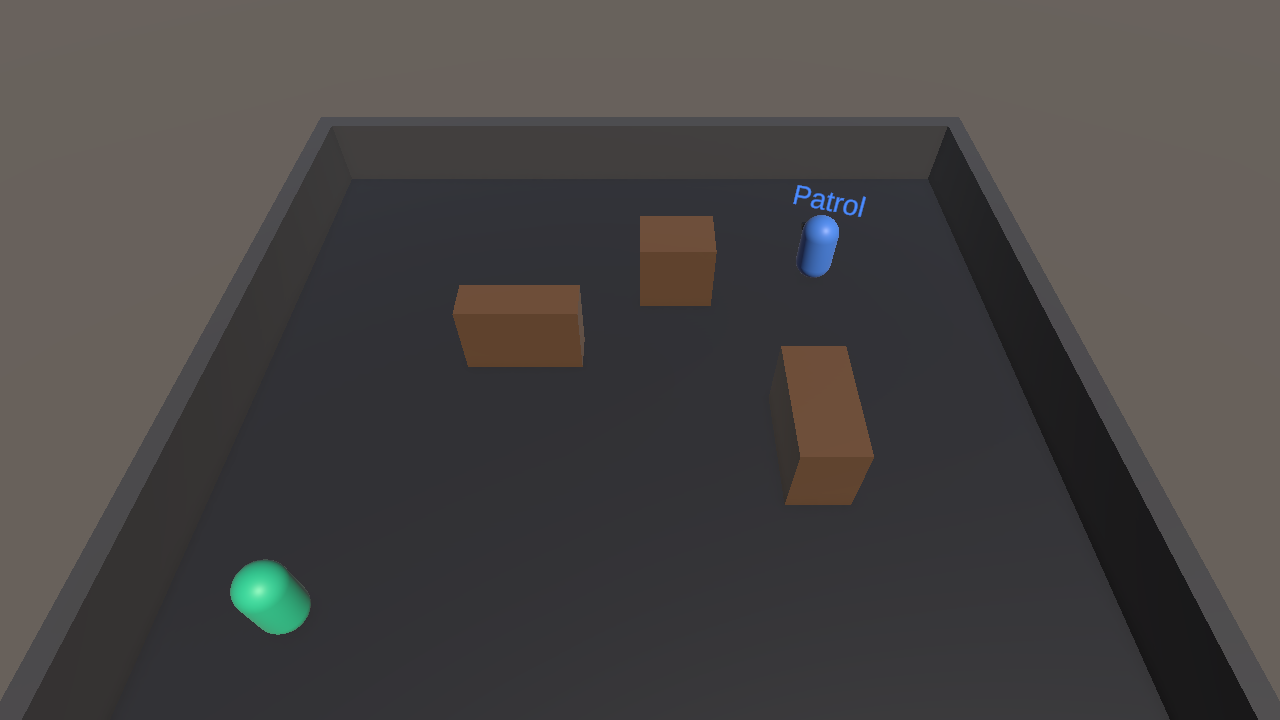
FOV_SIMULATION_ACTIVE
Combat System
The combat loop utilizes a LineRenderer for visual feedback, bypassing the need for expensive projectile instantiations in WebGL.
When the NPC enters the Attack State, it halts the NavMeshAgent, smoothly rotates to face the player, and checks an un-obstructed Line of Sight. If clear, it applies instant raycast damage and triggers a knockback force to the player's Rigidbody.
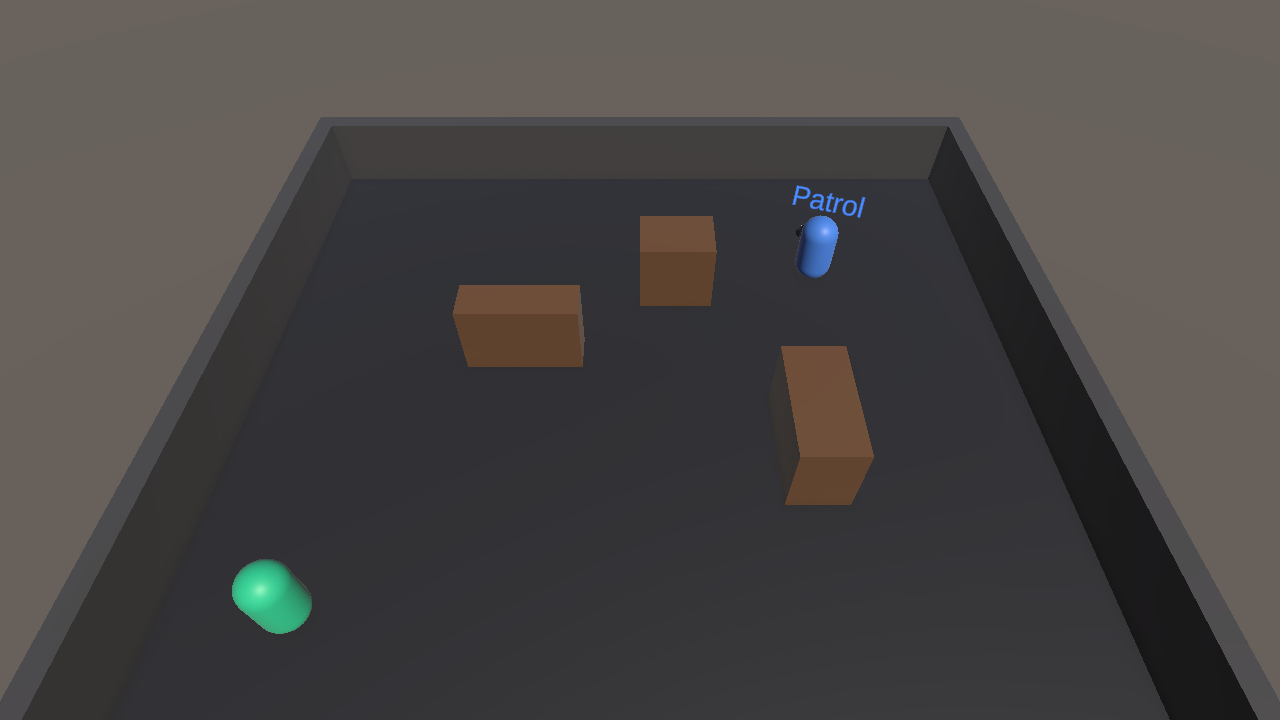
LASER_COOLDOWN_ROUTINE
Data Ownership Architecture
To maintain a clean architecture, data flows in a single direction. The UI components only read data via events, and the Brain only reacts to data injected by the Sensors.
| Data / State | Source / Owner | Observer |
|---|---|---|
| CurrentState | NPCBrain | NPCDebugUI |
| AggressionScore | PlayerBehaviorTracker | NPCBrain |
| PlayerLocation | NPCSensor | NPCMotor (NavMesh) |
| Health | HealthSystem | NPCBrain / UI |
Editor Automation Pipeline
For rapid iteration, I built an Editor Script: AINPCLabBuilder.cs. This tool adds a custom dropdown to the Unity Editor toolbar allowing for one-click environment generation.
Performance Metrics
~20
Draw Calls
<50KB
NavMesh Data
60
Stable FPS
Yes
IL2CPP Opt
Architectural Decisions
FSM over Behavior Trees: For a single NPC agent with highly predictable states, an FSM was chosen over a Behavior Tree to reduce overhead and memory allocation on WebGL.
NavMesh over A*: Implementing custom grid-based A* pathfinding in C# would consume significantly more CPU cycles. Unity's compiled C++ NavMesh system is highly optimized and perfectly suited for this prototype.
Brotli Decompression Strategy: To support seamless embedding within Next.js environments without complex custom server headers, the build utilizes pre-decompressed raw assets loaded directly via the modified index.html loader.
Future Expansion Possibilities
- Squad Coordination Logic
- Utility AI Scoring (Goal-Oriented)
- Procedural Level Generation
- Audio Propagation Systems
From Prototype to Production
Need AI Gameplay Systems
for your project?
I build production-ready FSM architectures, adaptive NPC ecosystems, and scalable Unity AI systems — engineered for performance across mobile, WebGL, and desktop platforms.